

This is a story about kind people trapped inside rigid systems that prevent them from being their kind selves.
They wanted to help. You could see it in their inner struggle on their faces. The desire to serve and delight you is blocked by the establishment SOPs (Standard Operating Procedures). They mumbled a helpless half-apology. That gap between what is the right thing to do and the disempowerment to deliver it alienates the customer, drains the employee, and hurts the brand.
The Lettuce and Mint Scarcity
Recently, at a wonderful Vietnamese restaurant in Singapore, I found myself in a psychological standoff over a garnish. The food was great. The ambiance was cozy and romantic. I was literally in the middle of taking photos for a glowing 5* Google review when we ran out of the herbs that accompanied our chicken.
“Could we get two or three more leaves of lettuce and mint?” I asked.
The waitress looked at me with the pained expression of someone watching a tragedy unfold in slow motion. “Sorry, no,” she said. “You need to top up a few dollars. You need to buy the extra portion.”
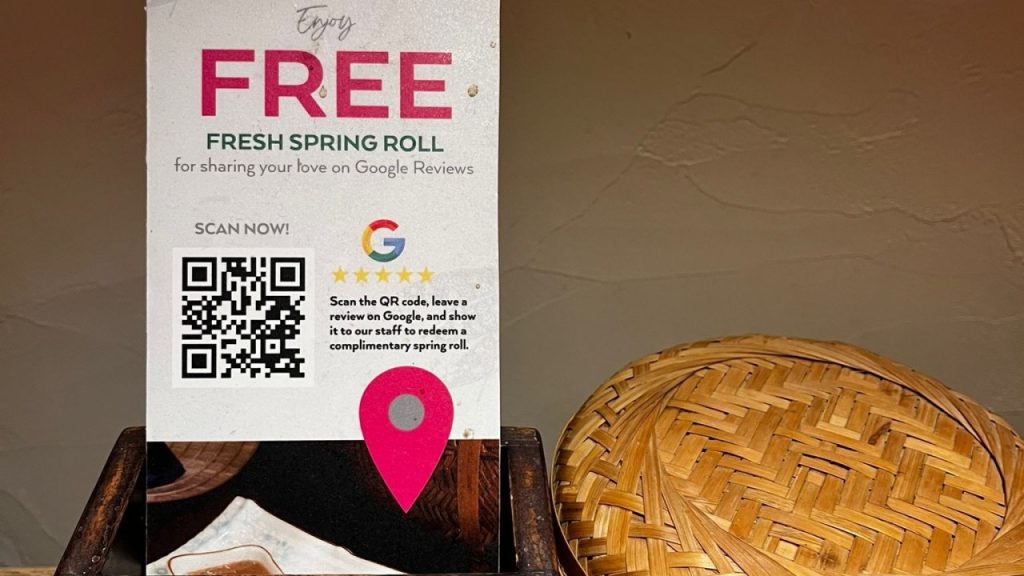
Here is the kicker: On the table, right next to the QR code for reviews, they offered free “sprinkles” (a small treat) in exchange for a five-star rating.
Let’s look at the hilarious math. In 2026, a few mint and lettuce leaves at a Singapore wet market cost no more than 50 cents.
The “bribe” they were offering for a Google review is priced at $8.60, but they are unwilling to provide a “cheap delight” that earns it organically. It’s the business equivalent of a suitor who refuses to hold the door open for you but offers you twenty dollars if you’ll tell his mother he’s a gentleman.
I was sure I could explain this logic to the manager, but my request was denied with one of the most annoying customer service answers: “My manager will tell you the same thing.”

Source: The official site of the restaurant
The Minimum-Purchase Police
The “Rigid System” followed me also to my vacation in Taiwan. On the way to Jiufen, Google reviews led us to a beautiful café with delicious-looking cinnamon buns, and a stunning sea view in Laomei Green Reef, rated 4.7.
The place was totally empty. We ordered coffee and a pastry.
“Sorry,” the staff said, looking genuinely pained. “It’s not meeting the minimum purchase.”
We pointed at the vast expanse of empty chairs. “There is nobody here. We just ate lunch; we literally cannot fit another sandwich into our bodies. We just want to enjoy the view for a few minutes and give you money.”
The response? “Sorry, Sir, this is the policy of the owner.”
I can understand the logic of a minimum purchase requirement to prevent people from buying one bottle of water, then camping on to hog a table for six hours. But when the outlet is empty, and we are just passing by, the “rule” stops protecting the business and starts hurting it. You lose a sale and a raving tourist’s 5* review to tell the world about the “hidden gem by the sea.”

Soaked Guests, Dry Math
As we arrived in Jiufen, it was raining cats and dogs. Our hotel’s “adjacent” car park turned out to be a few hundred meters away. By the time we reached the lobby, we were soaked. We learned our room was in a separate building, an additional several hundred meters away.
“Do you have a room in this building?” we asked. “Yes, many, but they are more expensive,” they said. “Can we swap? It’s pouring, and we’re already here with our bags.” “Yes, but you have to top up 50% more of the price.”
The most humane and delightful thing to do was to offer a complimentary upgrade. The photos on the booking site actually showed the room in the main building. It was approaching sunset; the probability of a walk-in booking was close to zero, and the room we were being sent to was identical in every respect except distance.
Unsold rooms are a perishable commodity. In the unlikely event that many last-minute customers arrive, you can still delight us by offering them a room in the main building, selling them our original room, and making a profit.
Again, we saw the agony and helplessness of being unable to do the right thing and delight. Rules are rules. They admitted they weren’t empowered to move us. They watched us stand there, dripping wet, knowing they had empty, dry rooms ten feet away that would almost certainly go unsold that night.

None of the service people we met were unkind. Every single one of them understood the situation perfectly and would have helped us in a heartbeat if permitted to do so.
The Sister Rule
“A loyal Ritz Carlton customer is worth roughly $200,000 over a lifetime of business, which makes $2,000 to keep them happy an economic decision, not a generous one.” – Horst Schulze
You don’t need to be the Ritz-Carlton to empower your frontline. Kendra Scott started her first physical store in 2010 on South Congress Avenue in Austin, selling jewelry she made with $500 in a spare bedroom.
Kendra’s refreshingly wholesome customer service policy fits on a napkin. That’s your return policy. That’s your every policy.” The entire manual is one question:
“We do this for our customers, how we treat our customers, but also how we treat each other. It’s, ‘How would you treat your sister?’ – Kendra Scott

The Sister rule makes customers feel cared for. It also simplifies everything and saves time for the customers and the employees. But most importantly, it gives the employee moral authority and a compass, replacing bureaucratic blocks with empathy and wisdom, trusting their human judgment.
“Don’t bury your customer service team in policies. Empower them to fix problems on the spot. Your customers will feel more valued, and your team will, too!” – Kendra Scott
Kendra shares: “When you give young associates that power, that trust, that you believe in them, they will do magical things. The people interacting with your customers are the most important people in your company. If you don’t think they have the power to make a decision, why did you hire them?”
That trust runs in both directions. “The first thing I say when I greet a new employee is ‘welcome to the family.’ I don’t ever want someone to see this as just a job. I want them to feel they are part of a company that is genuinely invested in their future.”An employee who feels cared for carries that care to delight the customer.
Her employees confirm it. One team member put it simply: “People care about you here. They want you to be happy, and they want to celebrate and be there for you throughout your life experiences.”
In a corporate world that distances itself from being a family, Kendra Scott’s culture, built on one question and genuine trust, grew from one Austin store to more than 130 locations and over 2,500 employees. Kendra credits the growth to listening to customers and treating them like family, starting with the people who serve them.
Empowered to Delight
A frontliner trapped inside a rigid SOP becomes a policy delivery device, reciting scripts they don’t believe and apologizing for decisions they didn’t make. Engagement drains. They feel ashamed, embarrassed, deprived of the pride they would have felt in extending the service they wish they could deliver.
The Delightful Iceberg model I developed more than a decade ago names the precondition simply: a Delightful Customer Experience (DCX) rests on a Delightful Employee Experience (DEX). Empower your people, trust their judgment, give them moral authority. They will delight your customers for you.
The Vietnamese waitress would have happily brought a handful of mint leaves. The Taiwanese café staff would have welcomed us with coffee and the sea view. The hotel team in Jiufen would have handed us the dry room with a warm smile.
Three mint leaves. Two happy tourists raving about a hidden gem by the sea. Two dry guests upgrading their booking for their next visit. Three five-star reviews earned without bribes. The delight was always there. It just needed permission.
Look at your own frontline today. Are they set up to delight, or to apologize?